
Blog
Preschool Lessons You Don’t Learn from a Curriculum Guide: Tales from the Tiny Trenches

I still remember the thunderous sound of twenty tiny feet stomping in unison—my unofficial welcome to preschool teaching. Nobody ever told me that one of my most important skills would be wrangling giggles while tiptoeing across a LEGO minefield, or that the real lessons would come in the form of sticky high-fives and crayon masterpieces. In a world buzzing about technology-driven education, it’s easy to forget the small, human moments. But ask any seasoned teacher, and they’ll say: the best classrooms run on love, curiosity, and a bit of chaos. Today, I’m pulling back the curtain on what makes early education truly magical—by sharing stories where lessons leap off the page and land right in our hearts.
When Tigers Stomp, Everyone Learns: The Power of Play-Based Learning
“Can everybody show me how tiger acts?”—A question that starts a whole world of learning. In my experience as a parent and observer in the preschool trenches, these simple invitations to play are the heartbeat of early childhood education. When a teacher asks children to stomp their feet like tigers, she is not just filling time. She is opening a door for children to express emotions, build social bonds, and develop skills that no curriculum guide can fully capture.
Imaginative Play: Where Big Emotions Find a Voice
Children experience big feelings every day, but they don’t always have the words to explain them. Pretending to be animals—like tigers stomping their feet—gives them a safe, fun way to show how they feel. I have seen children who are frustrated or excited channel those emotions into their tiger stomps, roaring and moving with energy. This kind of play-based learning is more than just fun; it is a natural way for children to process their feelings and learn self-regulation.
- Emotional Expression: Animal role-play helps children relate to each other and understand their own feelings.
- Safe Environment: The classroom becomes a space where it’s okay to feel big emotions and act them out.
The Preschool Teacher Role: Guiding Through Play
Teachers like Ms. E at Kinderland chuk Kang know that play is purposeful. When she leads a group activity—“Can everybody show me how tiger acts?”—she is teaching much more than animal movements. She is weaving in lessons about community values, turn-taking, and empathy. Through these group activities, children learn to listen, wait their turn, and respect each other’s space. The teacher’s role is to observe, guide, and gently support each child’s unique strengths as they emerge through play.
- Spotting Strengths: Purposeful play allows teachers to notice who leads, who follows, and who needs extra encouragement.
- Supporting Growth: Teachers can tailor their support, helping each child find their voice and confidence.
Group Activities Benefits: Confidence and Communication
Group activities are where shy children often surprise us. My son Martin was once hesitant to speak up in class. But when the teacher invited everyone to stomp like tigers, he joined in. Over time, these playful group moments boosted his confidence and love for learning. He started to volunteer answers, ask questions, and even help his classmates. The benefits of group activities in early childhood education are clear:
- Communication Skills Development: Children practice speaking, listening, and responding to others in a low-pressure setting.
- Social Confidence: Even the quietest children can find their voice through shared play.
- Problem-Solving: Working together to act out a story or solve a playful challenge builds critical thinking skills.
Play-Based Learning: A Foundation for Lifelong Skills
Research for 2025 highlights the importance of play-based and experiential learning. Inquiry-based and sensory-rich environments—like pretending to be animals, building with blocks, or exploring textures—help children make sense of the world. Gamification strategies, where learning is turned into a game, motivate preschoolers by making lessons fun and interactive. These methods are not just trends; they are proven ways to help children develop the skills they need for school and life.
‘Can everybody show me how tiger acts?’—A question that starts a whole world of learning.
Real-World Example: Martin’s Journey
At Kinderland chuk Kang, Martin’s transformation was clear. Through repeated group activities, his confidence soared. He learned to communicate his needs, share ideas, and solve problems with friends. His teacher’s focus on community values and playful learning made all the difference. Martin’s story is just one example of how play-based learning can unlock a child’s potential in ways that worksheets and drills never could.
- Key Takeaway: When children stomp like tigers, they are not just playing—they are learning to express themselves, connect with others, and grow into confident communicators.
Building Bridges with Blocks: Teachers, Values, and the Invisible Curriculum
When people think about preschool, they often picture colorful classrooms, story time, and children learning their ABCs. But as a preschool teacher, I know that so much more happens beneath the surface. The Preschool Teacher Role goes far beyond teaching letters and numbers. Every day, we are quietly shaping the hearts and minds of our students, building bridges with blocks—not just between toys, but between people, values, and lifelong skills.
The Invisible Curriculum: Lessons Beyond the Lesson Plan
There is a curriculum you won’t find in any guidebook or lesson plan. It’s the invisible curriculum: the lessons children absorb from the way we treat each other, the routines we create, and the values we model. While we might be teaching how to share blocks or clean up after snack, we are also embedding Moral Values Curriculum—like kindness, respect, and responsibility—into every interaction.
For example, when I guided Martin, a quiet boy in my class, to interact positively with others, I wasn’t just helping him make friends. I was encouraging him to take initiative, to show empathy, and to build confidence. These moments, though small, have significantly boosted his development. I know these lessons will benefit him well beyond the classroom walls.
Modeling Positive Character Development
Children are always watching. They notice how we speak to them, how we solve problems, and even how we handle frustration. By modeling calmness, patience, and understanding, I am teaching more than just classroom rules—I am showing them what Positive Character Development looks like in real life.
- When I say “please” and “thank you,” children learn respect.
- When I apologize for a mistake, they see responsibility in action.
- When I help a child who is upset, they witness kindness and empathy.
These daily choices are not written in any curriculum guide, but they are at the heart of what we do. Social-emotional learning (SEL) is woven into every moment, helping children develop self-regulation, empathy, and resilience. These are the skills that will help them thrive, not just in school, but in life.
Building Relationships: The Heart of Teaching
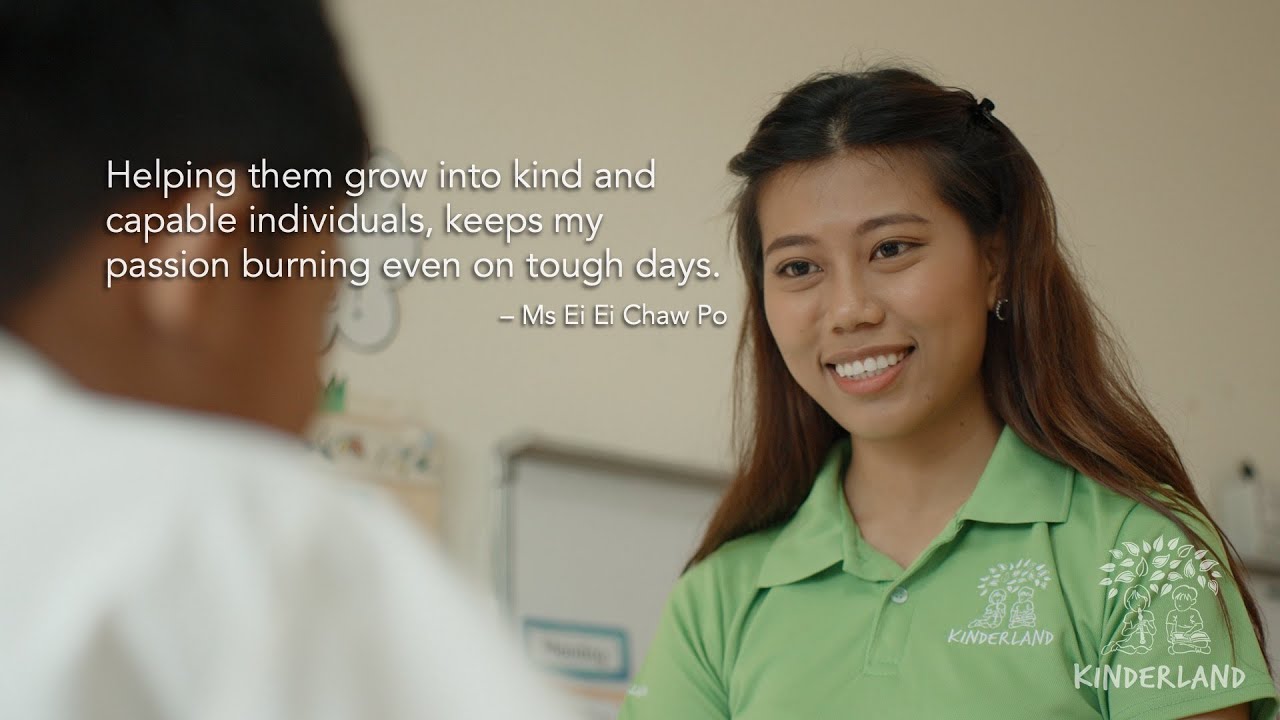
One of the most powerful parts of my job is building relationships—with children and their families. This connection is what keeps my passion burning, even on tough days. As I get to know each child’s unique personality, I can better support their growth and help them feel safe and valued.
‘Building relationship with the children and their families…keep my passion burning even on tough days.’
There are moments that remind me why I do this work. I remember the first time a group of children called out, “Teacher e!” as I walked into the room. Their excitement and trust made me feel truly valued and inspired. These relationships are the foundation for everything else we do in the classroom.
Social-Emotional Learning in Action
SEL is not a separate subject in preschool—it is part of every interaction. Children learn to name their feelings, solve conflicts, and support each other by watching and practicing with trusted adults. The classroom becomes a safe space where they can try, fail, and try again, knowing they are supported.
As teachers, we guide children to:
- Express their emotions in healthy ways
- Work together and share
- Take responsibility for their actions
- Show empathy and kindness to others
These skills are not just for preschool—they are building blocks for life. By focusing on Social-Emotional Learning and Building Relationships, we help children grow into kind, capable individuals. This is the invisible curriculum at work, shaping futures one small moment at a time.
No Two Snowflakes: Embracing Individual Strengths and Learning Styles
Every preschool teacher knows that no two children are alike. Step into any classroom and you’ll see it: one child quietly flipping through a picture book, another building a tower out of blocks, a third asking a dozen questions before snack time. As educators, we quickly learn that teaching strategies must be as unique as the children themselves. Great teachers celebrate these differences, recognizing that some children learn best by listening, while others need to move, tinker, or talk things out. This is the heart of developmentally appropriate practice—meeting each child where they are and helping them grow in their own way.
“Embracing the different learning styles in every child…try to understand their individual strength and interest through purposeful play.” These words have become my guiding principle. Each day, I look for ways to uncover what makes each child tick. Is it music? Movement? Stories? Art? Purposeful play is my favorite tool for this discovery. By carefully designing activities that are both fun and meaningful, I can observe how children engage, what excites them, and where their strengths lie. This isn’t just play for play’s sake—it’s intentional, with academic and values-based goals woven in.
Personalized and adaptive learning is not just a buzzword—it’s a necessity in early childhood education. Modern AI platforms now help teachers tailor lessons to individual needs, but even without fancy technology, a thoughtful teacher can adapt. I might introduce a counting game for a child who loves numbers, or a storytelling circle for the budding communicator. Teaching to the child, not the test, leads to deeper understanding and better long-term results. When children feel seen and valued for who they are, they become more engaged and confident learners.
Of course, teaching is about more than just academics. I believe that developing positive character is just as important as learning letters and numbers. That’s why I incorporate a moral values curriculum into our daily routines. But instead of drilling rules or reciting lists, I model positive behavior—showing kindness, patience, and respect in every interaction. I weave important values into our activities, whether we’re sharing toys, solving conflicts, or helping a friend. These moments are gentle but powerful, embedding lessons that will guide children throughout their lives.
A nurturing environment is essential for both learning and character development. Children thrive when they feel safe, respected, and encouraged. I strive to create a classroom where every child’s voice is heard and every effort is celebrated. Mistakes are not failures—they’re opportunities to learn and grow. By fostering this kind of environment, I help children build resilience, empathy, and a sense of belonging.
Research shows that developmentally appropriate practices—especially those that honor individual learning styles—are the foundation for effective literacy and language instruction from preschool through the early grades. When we adapt our teaching strategies to fit each child, we’re not just helping them learn; we’re helping them love learning. And when we nurture positive character through everyday moments, we’re preparing them to be good humans, not just good students.
In the end, the most important lessons in preschool are not found in any curriculum guide. They’re discovered in the tiny trenches—during circle time, on the playground, in the quiet moments between activities. They come from embracing each child’s uniqueness, adapting our teaching to their needs, and modeling the values we hope they’ll carry with them. As teachers, our greatest gift is to help every child shine in their own way, knowing that no two snowflakes are ever the same.
TL;DR: Preschool education is less about following one-size-fits-all rules and more about nurturing joy, resilience, and compassion through authentic connection, play, and real-world exploration—both for kids and their brave teachers.